

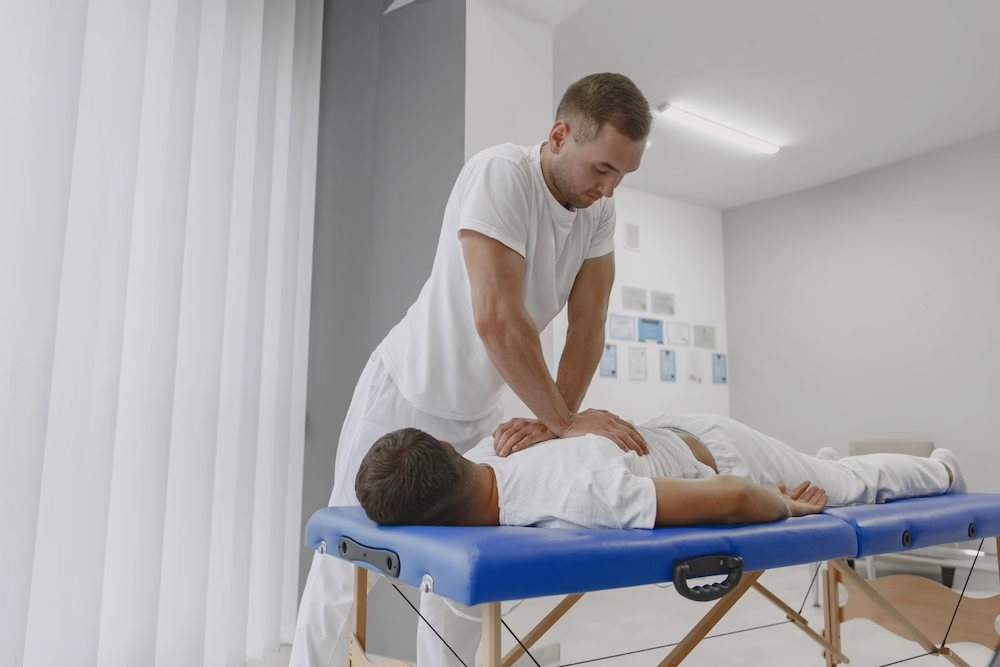
Surgery addresses a structural problem – but it doesn’t automatically restore full function. Many patients who’ve had back surgery, neck surgery, hip replacement, or other orthopedic procedures find themselves months later still dealing with stiffness, pain, weakness, or limited mobility they expected to be gone by now. Chiropractic care plays a meaningful role in post-surgical recovery for many of these patients – not by undoing the surgery, but by addressing the compensatory patterns, adjacent spinal dysfunction, and soft tissue issues that surgical intervention alone doesn’t resolve.
What Surgery Doesn’t Fix
It’s worth being honest about what surgery does and doesn’t accomplish. A spinal fusion stabilizes a problematic segment – but the vertebrae above and below that fusion now take on additional mechanical load. A discectomy removes the herniated disc material pressing on the nerve – but the disc space remains compromised, and the surrounding muscles and joints have often been compensating around the problem for months or years before the surgery.
A hip replacement restores the joint surface – but the lumbar spine, pelvis, and surrounding soft tissues have adapted their mechanics around the arthritic hip for years. Those compensatory patterns don’t automatically reset when the new joint is placed. And for patients who had significant pain before surgery, the nervous system’s sensitization to that pain sometimes persists even after the structural source has been removed.
Chiropractic care doesn’t try to redo what surgery accomplished. It addresses the functional gaps that remain after surgery – the adjacent spinal levels, the compensatory muscle patterns, the postural adaptations, and the soft tissue restrictions that influence how well the surgical outcome translates into actual daily function.
Types of Surgery Where Chiropractic Care Plays a Supportive Role
Spinal Surgery – Discectomy, Laminectomy, and Fusion
Post-surgical chiropractic care after spine procedures focuses primarily on the spinal levels adjacent to the surgical site. A lumbar fusion at L4-L5, for example, transfers additional mechanical load to L3-L4 and L5-S1. Keeping those levels mobile, properly aligned, and well-supported through rehabilitation and chiropractic care reduces the risk of adjacent segment breakdown over time – one of the most common long-term complications after spinal fusion.
We don’t adjust the fused or surgically repaired segment directly. The work happens around it – restoring function in the regions the surgery has placed greater demand on, and rebuilding the muscular support that protects the entire lumbar spine going forward.
Hip and Knee Replacement
Joint replacement surgery changes the mechanics of the hip or knee – but the lumbar spine, pelvis, and lower extremity that adapted around years of arthritic pain don’t automatically rebalance. Pelvic asymmetry, lumbar compensatory patterns, and altered gait mechanics commonly persist after hip replacement and contribute to ongoing back pain, hip discomfort, and functional limitations that patients and surgeons sometimes attribute simply to the aging process.
Chiropractic assessment after joint replacement often reveals clear, addressable mechanical issues in the lumbar spine and pelvis that are contributing to ongoing symptoms. Correcting these – alongside targeted rehabilitation for hip and core strength – significantly improves the functional outcome of the replacement surgery itself.
Shoulder Surgery
Rotator cuff repair, labral reconstruction, and shoulder stabilization procedures all require significant post-surgical rehabilitation. The cervical spine and upper thoracic spine play important roles in shoulder mechanics, and dysfunction in these regions is very common in patients with chronic shoulder problems. Post-surgical chiropractic care that addresses the cervical and thoracic spine alongside shoulder-specific rehabilitation often produces better functional outcomes than isolated shoulder rehab alone.
Neck Surgery – Cervical Discectomy and Fusion (ACDF)
Anterior cervical discectomy and fusion is one of the most common spinal surgeries performed. Post-surgical chiropractic care focuses on the unfused cervical levels, thoracic mobility, and the postural patterns that placed the original stress on the fused segment. Many patients with neck pain and reduced mobility following ACDF see meaningful improvement through gentle cervical mobilization at the adjacent levels and targeted rehabilitation – provided care is appropriately timed after the fusion has healed.
Timing and Safety Considerations
Post-surgical chiropractic care requires careful timing and close coordination with the surgical provider. We don’t begin care until the surgical site has had appropriate healing time – which varies by procedure – and we always review the operative report and any post-surgical imaging before recommending an approach.
For spinal fusions, we typically wait at least 3-6 months before working near the surgical site, and we communicate with the surgeon to confirm their timeline. For hip and knee replacements, gentle pelvic and lumbar work can often begin earlier – the new joint itself is not the focus, and the adjacent regions don’t require the same healing window.
At LiveWell Chiropractic Health Center, our location within the Ortho Integrative Medicine Institute in Clearwater makes coordination with orthopedic providers particularly straightforward. When collaborative care is in a patient’s best interest, that relationship is already in place.
What Post-Surgical Chiropractic Care Looks Like in Practice
Every post-surgical patient begins with a thorough assessment. We review your surgical history, current symptoms, any post-surgical imaging you have, and the functional limitations you’re experiencing. On-site X-rays are taken when they’ll provide useful information about current spinal alignment and the relationship between the surgical site and adjacent levels.
Treatment is always gentler in the post-surgical context than in a typical chiropractic case. High-velocity manipulation near a surgical site is generally avoided. Gentle mobilization, soft tissue work, targeted rehabilitation exercises, and wellness-focused maintenance care are the primary tools. The goal is steady functional improvement over time – not aggressive correction.
For patients with chronic soft tissue conditions that persist after surgery – tendon pain, scar tissue restrictions, or tissue that hasn’t healed properly – our shockwave therapy offers a non-invasive way to stimulate the healing response in tissues that have stalled.
When Chiropractic After Surgery Isn’t Appropriate
We’re honest about limitations. Post-surgical chiropractic care is not appropriate when the surgical site hasn’t adequately healed, when there are signs of surgical complication or hardware failure, when the patient’s surgeon has specific contraindications, or when the presenting symptoms suggest a surgical complication that requires medical evaluation. If your assessment raises any of those concerns, we’ll tell you directly and refer you back to the appropriate provider.
Frequently Asked Questions
How soon after back surgery can I see a chiropractor?
It depends on the type of surgery and your surgeon’s guidelines. Soft tissue work and gentle rehabilitation can often begin earlier than spinal mobilization near the surgical site. We always review your operative history and coordinate with your surgeon before beginning care. Most patients are appropriate candidates for some form of post-surgical chiropractic support 3-6 months after lumbar fusion, and sooner for less invasive procedures.
Will chiropractic care interfere with my surgical hardware?
No – provided care is performed appropriately. We don’t apply direct force to fused segments or work in ways that stress surgical hardware. The focus is on the segments above and below the fusion, the surrounding soft tissues, and the global postural mechanics that influence how the entire spine functions. Surgical hardware is not at risk from appropriately modified chiropractic care.
My surgery was years ago and I still have pain – can chiropractic help?
Yes, often significantly. Long-term post-surgical pain frequently has a mechanical component that hasn’t been addressed – adjacent level dysfunction, compensatory muscle patterns, or postural adaptations that have developed over years. A thorough assessment often reveals clear, treatable causes for ongoing symptoms even years after surgery.
If you’ve had surgery and aren’t where you expected to be functionally, we’d like to help you understand why and what can be done about it. Call us at (727) 591-0550 or book your consultation online at LiveWell Chiropractic Health Center in Clearwater.