

Spinal decompression and chiropractic adjustments are both effective, non-surgical treatments for spine problems, but they work in different ways and are suited to different situations. Patients often assume they’re the same thing or wonder why one might be recommended over the other. The honest answer is that they address different aspects of spinal health, and for many people the best results come from using them together. Here’s how each works and how to know what your spine needs.
What a Chiropractic Adjustment Does
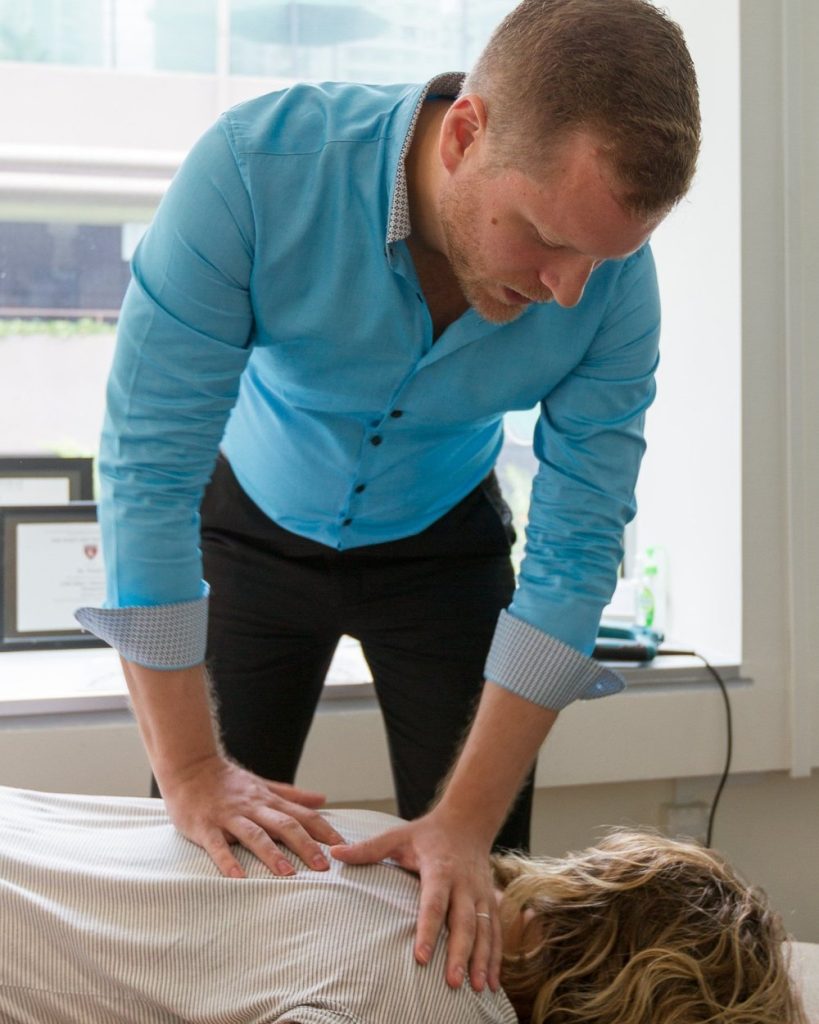
A chiropractic adjustment is a precise, controlled movement applied to a specific joint in your spine. The purpose is to restore proper motion and alignment to joints that have become restricted, stuck, or misaligned. When a spinal joint isn’t moving the way it should, it creates irritation, muscle tension, and nerve interference, and an adjustment corrects that.
Think of an adjustment as addressing the joints and alignment of your spine. It’s especially effective when the problem is a restricted or misaligned segment, when muscles are tense from compensating around poor joint movement, or when nerve irritation is coming from a joint that isn’t functioning properly. The popping sound people associate with adjustments is simply gas releasing from the joint, not bones being forced anywhere.
Adjustments are the foundation of chiropractic care and work well for a wide range of issues, from neck pain and back pain to headaches and joint restrictions throughout the spine.
What Spinal Decompression Does
Spinal decompression takes a different approach. Rather than restoring motion to a joint, it uses gentle, controlled traction to create space and negative pressure within the spinal discs. You lie on a specialized table, and the equipment applies a carefully calibrated stretch that decompresses the disc.
That negative pressure does two important things. It helps draw bulging or herniated disc material inward, away from the nerve it may be pressing on, and it improves the flow of water, oxygen, and nutrients into the disc, which supports healing in a structure that normally has very poor blood supply.
Where an adjustment addresses the joint and alignment, decompression addresses the disc. It’s especially suited to disc-related problems, including herniated and bulging discs, degenerative disc disease, and disc-related nerve compression producing sciatica or arm symptoms.
The Key Difference
Here’s the simplest way to think about it. A chiropractic adjustment restores movement and alignment to spinal joints. Spinal decompression relieves pressure on spinal discs and nerves. One works primarily on the joints and their motion. The other works primarily on the discs and the pressure within them.
They’re not competing treatments. They target different structures, and which one you need depends on what’s actually driving your problem.
Which One Do You Need?
The answer comes down to what’s causing your symptoms, which is why a proper assessment matters so much.
If your problem is primarily one of restricted or misaligned joints, chiropractic adjustments are likely the core of what you need. Stiffness, reduced range of motion, joint-related pain, and the muscle tension that comes from poor joint movement all point toward adjustments.
If your problem is disc-related, particularly a herniated or bulging disc pressing on a nerve, or degenerative disc changes, spinal decompression is likely to be central to your care. Symptoms like pain radiating down an arm or leg, numbness, and tingling from disc compression are strong indicators.
Often, though, the answer is both. Many spine problems involve both joint dysfunction and disc issues, and the two treatments complement each other well. Restoring joint movement with adjustments while relieving disc pressure with decompression addresses the problem more completely than either could alone.
How We Decide at LiveWell Chiropractic
At LiveWell Chiropractic Health Center in Clearwater, we don’t apply a one-size-fits-all approach. Every patient starts with a thorough assessment to understand exactly what’s driving their symptoms. We evaluate how your spinal joints are moving, assess for signs of disc involvement and nerve compression, and, when appropriate, use on-site X-rays to clarify the structural picture.
Based on what we find, we build a plan that uses the right tool, or combination of tools, for your specific situation. For some patients that’s primarily adjustments. For others, decompression is the priority. For many, it’s a thoughtful combination, often supported by rehabilitation exercises to build the strength and stability that make the results last.
Why Combining Them Often Works Best
Consider a common scenario. Someone has a herniated disc that’s pressing on a nerve, and the surrounding spinal joints have become restricted and misaligned as the body compensates around the problem. Decompression addresses the disc and nerve pressure. Adjustments restore the joint movement that’s been lost. Rehabilitation rebuilds the support to hold the improvements.
Treating only the disc while ignoring the joint dysfunction, or vice versa, leaves part of the problem unaddressed. This is why a comprehensive approach that draws on both treatments as needed tends to produce the most complete and lasting relief.
Frequently Asked Questions
Is spinal decompression just a stronger version of an adjustment?
No, they’re fundamentally different. An adjustment is a quick, precise movement that restores joint motion. Decompression is a sustained, gentle traction that relieves pressure within the disc. They address different structures and problems.
Can I get both in the same treatment plan?
Yes, and many patients do. When a problem involves both joint dysfunction and disc issues, combining the two often produces better results than either alone. We tailor the combination to what your assessment reveals.
How do I know which one is right for me?
A proper assessment is the reliable way to tell. The right treatment depends on whether your problem is primarily joint-related, disc-related, or both. We evaluate this carefully before recommending an approach rather than defaulting to one treatment for everyone.
If you’re dealing with a spine problem in the Clearwater area and want to know which approach fits your situation, we’d be glad to help you figure it out. Call us at (727) 591-0550 or book your consultation online at LiveWell Chiropractic Health Center.