
Most parents nag their teenagers about slouching at some point. Stand up straight, shoulders back, stop hunching over that phone. But sometimes a teen’s slouch is more than a bad habit. It can be a sign of postural changes, muscle imbalances, or occasionally a structural issue that’s worth paying attention to before it becomes harder to address. Knowing the difference helps you decide when to let it go and when to get it checked.
Why Teen Posture Is Worth a Second Look
Adolescence is a period of rapid growth, and the spine is changing quickly during these years. Bones lengthen, muscles work to keep up, and posture is still developing. That makes the teen years both a vulnerable window, when poor patterns can take hold, and an opportune one, when the spine is still responsive enough that those patterns can be corrected more easily than they can in adulthood.
Add to that the reality of how teenagers spend their time. Hours hunched over phones, laptops for schoolwork, heavy backpacks, and long stretches sitting in classrooms and at desks all pull the body into a forward, rounded position. The slouch you’re seeing is often the visible result of those daily forces acting on a spine that’s still forming.
Most of the time this is correctable. But it’s worth understanding what the slouch might be pointing to.
The Common Culprits Behind a Teen Slouch
Forward Head and Rounded Shoulders from Device Use
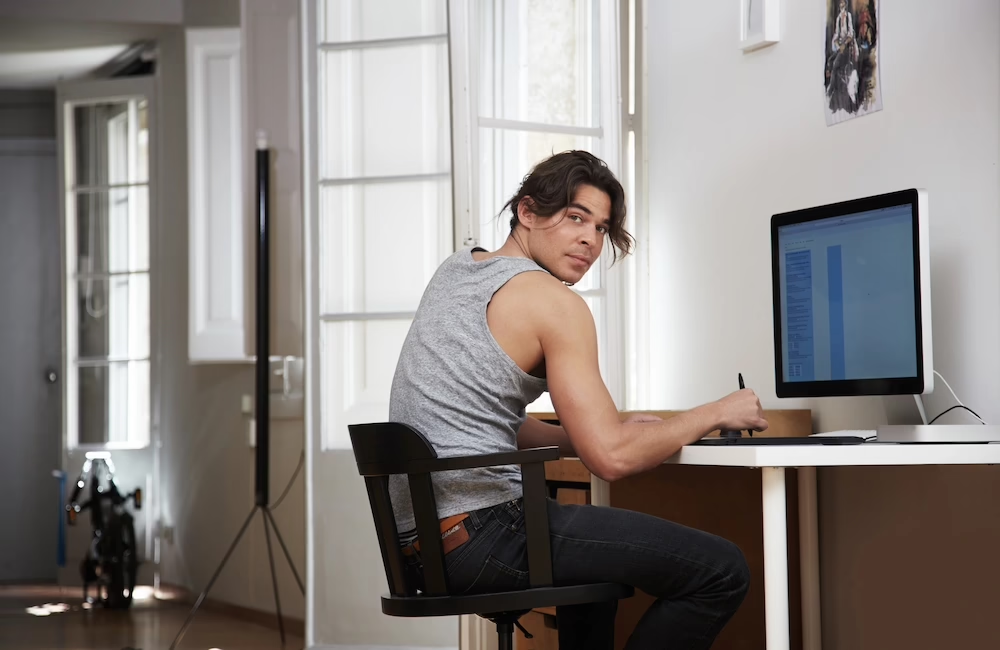
This is by far the most common pattern. Looking down at a phone for hours pulls the head forward and rounds the shoulders, and the muscles gradually adapt to hold that position. The result is the classic hunched look, along with the tight chest and weak upper back muscles that come with it. Over time this can contribute to neck pain and headaches, even in young people.
Weak Postural Muscles
A lot of teens simply haven’t developed the core and back strength needed to hold good posture through a long day. When those muscles fatigue, the body collapses into the path of least resistance, which is a slouch. This is especially common in less physically active teens, but even athletes can have specific weak links that show up as poor posture.
Backpack Strain
Heavy backpacks worn over one shoulder or hanging too low pull the spine out of alignment day after day. A backpack that’s too heavy forces the body to lean and compensate, and those compensations can become habitual postural patterns over a school year.
Scoliosis
Less commonly, what looks like a slouch is actually related to scoliosis, a sideways curvature of the spine that often appears during adolescent growth spurts. This is one reason a persistent or asymmetrical posture issue is worth having assessed rather than assuming it’s purely behavioral.
Signs That Warrant a Closer Look
So when should you move from nagging to actually getting it checked? A few signs suggest it’s worth a professional assessment.
Uneven shoulders or hips, where one side sits noticeably higher than the other, can indicate a structural issue rather than a simple habit. One shoulder blade that sticks out more than the other is a similar flag.
Posture that looks asymmetrical, leaning or curving to one side rather than just rounding forward, is worth evaluating, as this pattern is more associated with scoliosis than with habitual slouching.
Complaints of neck, back, or shoulder pain in a teenager should not be dismissed as growing pains. Persistent pain in a young person has a cause worth identifying.
A slouch that seems to be getting more pronounced over time, rather than staying stable, suggests progressive changes that benefit from earlier rather than later attention.
How We Assess Teen Posture at LiveWell Chiropractic
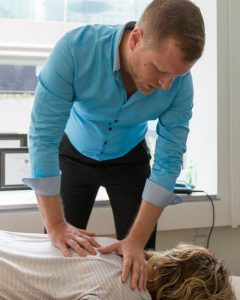
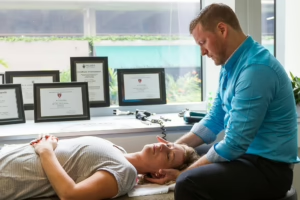
At LiveWell Chiropractic Health Center in Clearwater, assessing a teenager’s posture starts with a thorough evaluation of how the spine is sitting and moving. We look at posture from multiple angles, assess for asymmetry that might suggest scoliosis, evaluate spinal range of motion and joint function, and check the strength and balance of the postural muscles.
If there are signs that point toward scoliosis or another structural concern, on-site X-rays give us a clear, measurable picture. Dr. Fisher’s advanced certification through The Clear Institute, which specializes in scoliosis and spinal rehabilitation, means teen posture issues are assessed with specific expertise rather than a general once-over.
The aim is to sort out what’s behavioral, what’s a correctable muscle or alignment issue, and what, if anything, needs more focused attention.
What Can Be Done
The good news is that most teen posture issues respond well to care, partly because the spine is still developing and adaptable. Treatment depends on what the assessment finds.
For posture driven by device use and weak muscles, the approach combines gentle chiropractic care and rehabilitation to restore proper alignment and movement with specific corrective exercises to strengthen the muscles that hold good posture. We also give practical guidance on phone and screen habits, backpack use, and study setups, because changing the daily forces acting on the spine is part of the solution.
For teen athletes, posture and spinal health tie directly into performance and injury prevention. Our athlete care approach addresses the specific demands of their sport alongside the postural work.
When scoliosis is identified, care focuses on managing the curve, improving function, and monitoring it appropriately, often in coordination with the teen’s pediatrician or other providers.
The Window Matters
One reason to address teen posture sooner rather than later is that the adolescent spine is more responsive to corrective influence than the adult spine. Patterns that are relatively easy to address at fifteen can become entrenched and harder to change at thirty. Helping a teenager develop better posture and spinal health now is an investment that pays off across their whole life.
That doesn’t mean every slouch is an emergency. Most are not. But it does mean that if something seems off, getting it assessed during this responsive window is genuinely worthwhile.
Frequently Asked Questions
Is chiropractic care safe for teenagers?
Yes. Techniques are adapted to the teen’s age, size, and development, and care is gentle and appropriate for a still-growing spine. We always assess thoroughly before recommending any specific approach.
How do I know if it’s scoliosis or just bad posture?
The clearest way is a proper assessment. Signs like uneven shoulders or hips, a protruding shoulder blade, or a spine that curves to one side point more toward scoliosis, while forward rounding is more typical of habitual slouching. An evaluation, with imaging if needed, gives a definitive answer.
Can posture problems really cause pain in someone so young?
Yes. Forward head posture and rounded shoulders place real strain on the neck, upper back, and shoulders regardless of age. Teens who spend hours on devices increasingly report neck pain and headaches that trace back to these postural patterns.
If your teenager’s posture has you wondering whether it’s worth checking, we’re glad to take a look and give you a straight answer. Call us at (727) 591-0550 or book a consultation online at LiveWell Chiropractic Health Center in Clearwater.