
Knee pain is one of those complaints that rarely gets referred to a chiropractor – which is why so many people with persistent knee pain keep cycling through treatments that don’t fully resolve it. The knee is a hinge joint caught between two powerful influence zones: the hip above and the foot below. When the mechanics of either are off – and when the lumbar spine and pelvis that control hip alignment are dysfunctional – the knee absorbs the consequences. At LiveWell Chiropractic Health Center in Clearwater, assessing the full mechanical chain rather than just the painful joint is how we consistently find and fix knee pain that hasn’t responded elsewhere.
Why the Knee Is Rarely the Whole Story
Think about what the knee actually does. It’s a relatively simple joint – primarily a hinge – that doesn’t have the freedom to compensate independently for poor mechanics above or below it. When the hip doesn’t rotate properly, the knee has to rotate instead. When the foot overpronates, the tibia internally rotates and the knee tracks inward. When the lumbar spine and pelvis are unlevel or restricted, the entire lower extremity kinetic chain loads asymmetrically through every step.
The knee sits in the middle of all of that and takes the strain. Over time, abnormal loading patterns produce inflammation, cartilage wear, tendon irritation, and eventually the kind of persistent pain that makes climbing stairs, squatting, or running genuinely uncomfortable.
This doesn’t mean the knee itself is never the primary problem. Ligament injuries, meniscal tears, and significant osteoarthritis are real structural conditions that require their own specific management. But in a large proportion of chronic knee pain cases, the knee is suffering the consequences of mechanics that originate elsewhere – and addressing those mechanics is what produces lasting relief.
Common Knee Pain Presentations We See
Patellofemoral Pain Syndrome
Pain around and behind the kneecap – often described as aching with stairs, squatting, or prolonged sitting – is one of the most common knee complaints we see. The patella tracks in a groove on the femur as the knee bends and straightens. When the hip external rotators are weak, the IT band is tight, or the foot pronates excessively, the patella tracks laterally rather than centrally. That malalignment produces the characteristic pain of patellofemoral syndrome, and treating only the knee itself rarely solves it fully.
IT Band Syndrome
Sharp, lateral knee pain that appears predictably at a specific point during running or cycling – and eases with rest – is the classic presentation of IT band syndrome. The IT band isn’t a muscle that can be stretched effectively on its own. The tension driving it comes from the TFL and gluteal complex at the hip, and from the pelvic and lumbar mechanics that influence how those muscles work. Releasing the IT band locally without addressing the hip is why this condition keeps recurring in so many patients.
Patellar Tendinopathy
Chronic patellar tendon pain – felt just below the kneecap and aggravated by jumping, landing, or prolonged kneeling – develops from repetitive overload of the tendon beyond its capacity to repair. It’s common in active patients and athletes. Our shockwave therapy has a strong evidence base for patellar tendinopathy specifically, stimulating the healing response in chronically irritated tendon tissue where conventional rest and stretching have stalled.
Knee Pain from Lumbar and Hip Referral
The L3 and L4 nerve roots refer pain to the anterior knee and inner thigh. Lumbar dysfunction at these levels can produce anterior knee pain with no local knee pathology at all. This is one of the most commonly missed diagnoses in knee pain patients – particularly those who’ve had normal knee imaging and can’t understand why their knee still hurts. A lumbar and hip assessment as part of the knee evaluation often reveals the answer.
Osteoarthritic Knee Pain
Degenerative changes in the knee joint are common in older adults and those with a history of significant physical demands or prior knee injuries. While chiropractic care can’t reverse the degeneration itself, optimizing the mechanics of the lumbar spine, pelvis, and hip significantly reduces the abnormal loading that accelerates cartilage wear and produces pain. Many patients with arthritic knee pain find their symptoms improve meaningfully when the surrounding mechanical environment is properly addressed.
How We Assess Knee Pain at LiveWell Chiropractic
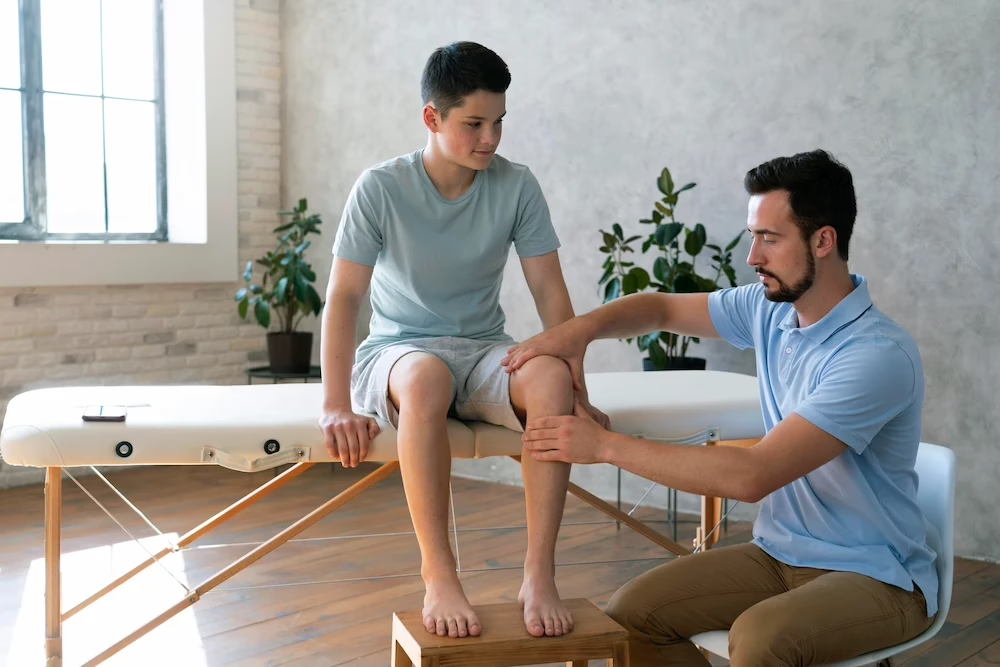
At LiveWell Chiropractic Health Center, knee pain assessment starts by looking at the full mechanical chain – not just the knee. We assess lumbar alignment and mobility, pelvic symmetry, hip range of motion and muscle strength, knee tracking and stability, and foot mechanics. Specific orthopedic tests identify ligamentous, meniscal, and patellar tracking issues. Neurological assessment rules in or out lumbar nerve root referral.
When imaging is indicated, on-site spinal X-rays give us a clear picture of lumbar and pelvic alignment. If knee-specific imaging is needed, we discuss referral for X-ray or MRI through appropriate channels – our location within the Ortho Integrative Medicine Institute makes that coordination straightforward.
What we’re looking for is the weakest link in the mechanical chain driving the knee pain. Once we find it, the treatment plan targets it specifically.
How Chiropractic Care Helps Knee Pain
Lumbar and Pelvic Alignment
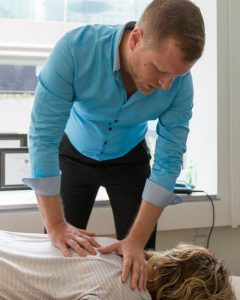
Restoring proper alignment and motion to the lumbar spine and pelvis changes the loading environment the entire lower extremity operates within. A level pelvis and a properly functioning lumbar spine allow the hip to rotate correctly, which allows the knee to track correctly. Many patients notice changes in their knee symptoms relatively quickly after lumbar and pelvic adjustments – a clear indicator that spinal mechanics were a significant driver.
Hip Mobilization and Soft Tissue Release
Tight hip external rotators, a restricted iliotibial band, weak glutes, and inhibited hip abductors all alter knee mechanics in predictable ways. Targeted soft tissue work and hip mobilization address these patterns directly. Building gluteal strength and hip abductor control through our rehabilitation program provides the active muscular support the knee needs – not just in the treatment room, but during every step of the day.
Shockwave Therapy for Tendon Issues
For patients dealing with chronic patellar tendinopathy, IT band syndrome with a significant soft tissue component, or pes anserine bursitis that hasn’t responded to conservative care, shockwave therapy stimulates the body’s healing response in a way that passive treatment can’t achieve. It’s a non-invasive option that produces meaningful results for the right chronic tendon conditions around the knee.
Gait and Movement Retraining
How you load the knee during walking, running, squatting, and climbing stairs matters enormously for knee health. We provide specific guidance on movement patterns and loading strategies that reduce knee stress during daily activities and exercise. This practical component is what translates clinical improvement into lasting function outside the practice.
When to Consider Orthopedic Evaluation Alongside Chiropractic Care
Chiropractic care is highly effective for mechanical knee pain – but some presentations require orthopedic input. Acute ligament injuries with significant instability, locked knees from a displaced meniscal tear, and severe progressive osteoarthritis approaching bone-on-bone contact all warrant orthopedic assessment. We’ll tell you clearly when that’s the case and facilitate the appropriate referral.
For the large majority of chronic knee pain patients – those without those acute structural findings – chiropractic care that addresses the full mechanical chain is the most comprehensive conservative approach available.
Frequently Asked Questions
Can a chiropractor adjust the knee itself?
Yes – the knee joint can be mobilized directly when indicated. Joint mobilization techniques restore motion to a restricted knee, reduce inflammation, and improve tracking. This is typically combined with lumbar, pelvic, and hip work rather than used in isolation, since the knee rarely dysfunctions independently of the mechanics above it.
My knee MRI came back normal – why does it still hurt?
Normal MRI findings are common in mechanical knee pain because the source of the problem is often in the lumbar spine, pelvis, or hip rather than the knee itself. Imaging of the knee finds local pathology – it doesn’t assess the mechanics of the full lower extremity chain. A chiropractic assessment that evaluates the whole picture often identifies the cause that imaging missed.
Can chiropractic care help avoid knee replacement surgery?
In some cases of moderate osteoarthritis with significant mechanical contributors, addressing the lumbar, pelvic, and hip mechanics can meaningfully reduce knee loading and slow the progression that leads toward replacement. It won’t reverse significant existing degeneration, but optimizing the mechanical environment around an arthritic knee can delay or in some cases avoid the need for replacement surgery.
If knee pain has been limiting what you can do in the Clearwater, Palm Harbor, Safety Harbor, or Dunedin area, we’d be glad to assess the full mechanical picture and give you a clear answer on what’s driving it. Call us at (727) 591-0550 or book your consultation online at LiveWell Chiropractic Health Center.