
It’s unnerving to feel pins and needles on your back, arms, or legs. You might dismiss it at first. Maybe you slept wrong or sat in a chair for too long. When the tingling becomes a constant numbness, it no longer feels like a minor inconvenience. Why does this happen? What is the cause? How can you stop it? Spinal Decompression is a solution that people with this condition are often offered. Although the term may sound intimidating, the concept is actually quite simple. The body will often respond by experiencing less pain and tingling. If all goes well, it may even return to its normal state. Livewell Chiropractic focuses on making the process as non-invasive, safe and effective as possible.
What Causes Numbness and Tingling?
These symptoms are usually caused by nerves that have been pinched or compressed along the spine. Imagine your spine as a busy highway. If one lane is blocked by a herniated disk, spinal stenosis or even bone spurs, the traffic (in this instance, nerve signals), slows or stops. What is the result? The result?
Spinal Decompression Therapy can help. The pressure on the nerves can be reduced by gently stretching the spine or opening the space surgically. When the pressure is removed, symptoms such as numbness or tingling can often improve.
What is Spinal Decompression exactly?
The main goal of spinal decompression therapy is to create enough space for your nerves and discs to function properly. There are two main approaches:
- Non-surgical Spinal decompression is usually performed using traction tables, motorized devices or other methods that stretch the spine. Most people begin with this method because it is non-invasive, and there is little or no downtime.
- Spinal Decompression Surgery is a more sophisticated option in which a spine specialist or neurosurgeon removes tissue, bone or part of the disc to relieve pressure. This category includes procedures like laminectomy or laminotomy.
Both methods have the same goal: to reduce pain, ease pressure and give the nerves room to “breathe”.
Non-Surgical Spinal Compression: A Gentle Step
Surgery is often a last option for many people. This is understandable. Many conditions, such as herniated or bulging discs and degenerative disc diseases, can be managed with non-invasive treatment.
You are fitted with a harness that wraps around your pelvis and torso. Then, you are placed on a computerized table. The machine uses gentle stretching to change the position of your spine, just enough to relieve the pressure. The bulging discs will retract, and nutrients will flow back into your spine.
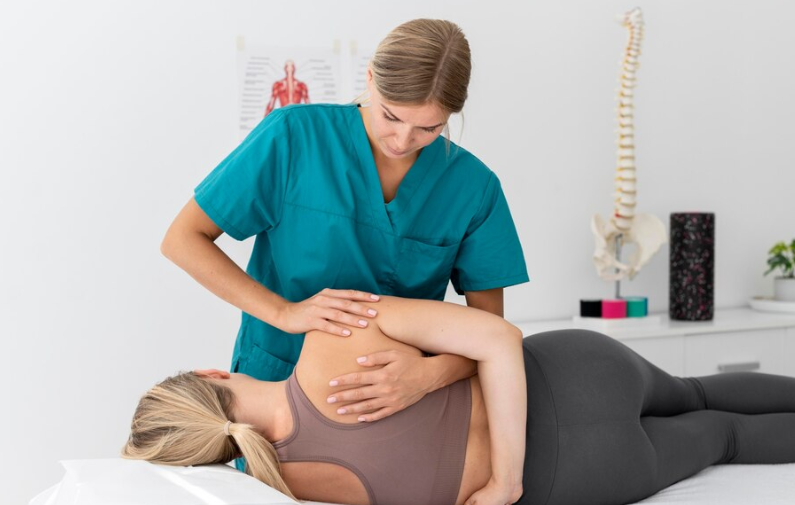
Many patients experience significant improvements when combined with lifestyle changes or simple chiropractic adjustments. If you’re looking for a way to relieve back pain without using needles or scalpels this is often the place to start.
Spinal Decompression Surgery: When it Becomes Needed
Sometimes conservative measures are not enough. When conservative options are not enough, more complex surgery or minimally invasive spine decompression may be required. The procedures may include:
- Microdiscectomy: removing only the damaged part of a herniated disk.
- Anterior cervical Discectomy and Fusing (ACDF) is the removal of a neck disc and the fusion of the vertebrae around it.
- A corpectomy is the removal of an entire vertebra if there has been severe damage.
- Laminectomy (or Laminotomy) – removal of part or the entire lamina, the back part of vertebrae to allow access to the spinal canal.
These procedures are considered spinal surgery alternatives. Recovery is usually faster with techniques such as MISS (minimally-invasive spine surgery), which uses smaller incisions.
These surgeries are often performed by patients who have become disabled due to numbness or tingling. When successful, this surgery can lead to increased mobility, strength and independence.
Spinal Decompression is Beneficial for a Variety of Conditions
Who is a candidate for spinal decompression? People with:
- Radiating pain from herniated or bulging disks.
- Spinal stenosis is a narrowing of spinal canal that leads to chronic pressure
- Sciatica is a nerve compression that causes burning and tingling in one leg.
- Degenerative disc disease is a gradual breakdown of discs which reduces flexibility.
- Radiculopathy is a nerve root compression causing weakness or loss in sensation.
In each of these conditions, nerve compression is the cause for numbness or tingling. And in each case, Spinal Decompression–whether non-surgical or surgical–aims to relieve that pressure.
Recovery and Realistic expectations
How soon can you expect to feel better? Answers are not universal. Patients may feel relief in just a few sessions. Some patients need weeks of therapy. Some surgical patients may be able to return to work within a few weeks. However, full recovery could take several months.
Physical therapy, stretching and follow-up treatment all play a huge role. You might be disappointed if you expect a quick fix. If you consider spinal decompression to be part of a larger journey towards healing, then the results may feel worthwhile.
Spinal Decompression: The Human Perspective
All of this has a real emotional component. You can become worn out by constant numbness and tingling. You’re distracted at work, you lose sleep and you may be hesitant to enjoy the things that you love.
It was like taking back control. I recall someone saying that it felt like “walking in a shoe half-full of sand” – you can move, but never feel stable. It wasn’t perfect but it was a step forward.
It’s important to remember that relief is not just physical. It is the assurance that your body responds, that symptoms are not permanent, and you have options.
Location-Based Perspective
Spinal decompression can be found in hospitals and clinics across the nation, but some regions — like Spinal Decompression San Antonio/Syracuse NY– are highlighted as advanced centers that specialize in both traditional and minimally invasive techniques.
For most people, it’s not about where treatment is available. The real question is whether or not they can find an experienced provider who will take the time to personalize their approach and explain the options in a clear manner.
Livewell Chiropractic is here to help. Livewell Chiropractic’s approach is geared toward non-surgical back treatments and chiropractic spinal decompression for those who don’t want to go straight to surgery.
Weighing Risks and Alternatives
Each treatment comes with its own level of risk. Although serious complications are rare, decompression is not without risk. Risks associated with lumbar or cervical decompression surgeries include nerve damage, infection and incomplete relief.
Most providers suggest a “stepped approach”. Start with the least invasive procedure and only move on if needed. In some cases, spinal stabilization or a more complex spine operation may be your only option. But you should not rush to make a decision.
Last Thoughts: Spinal Decompression – Is it Worth the Consideration?
Chances are, your spine is trying to tell you something. Ignoring the problem rarely improves things. Spinal Decompression Therapy is not a commitment to surgery. It’s just a first step towards finding relief.
Spinal decompression is not just for back problems. It is about giving people the ability to move without pain, sleep without it, and get through their workday without distraction. Sometimes, it’s about giving people hope that their lives don’t need to be limited.
Talking to experts like those at Livewell Chiropractic will help you make sense of your options. A plan is essential, whether it’s nonsurgical spinal decompression or traction therapy. It can also be a referral to neurosurgeons for more advanced treatment.
It may take a while to get rid of the numbness or tingling. You might not see relief from numbness and tingling with the first treatment. With the right guidance and a little patience, you can achieve it. For many, the first step is spinal decompression.