

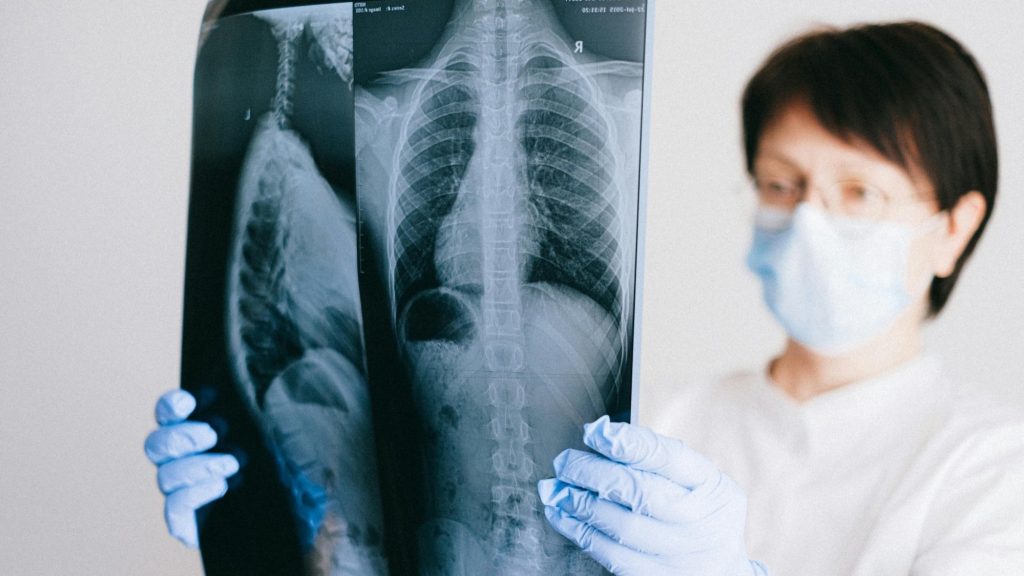
If you’re new to chiropractic care, the idea of getting X-rays might raise questions. Do you really need them? Are they always necessary? Is it just routine, or is there a real reason? The honest answer is that X-rays aren’t needed for every patient, but in certain situations they provide information that makes your care safer and more effective. Here’s a straightforward look at when they matter, what they show, and when you can skip them.
X-Rays Aren’t Automatic
Let’s start with the most important point. Not every chiropractic patient needs X-rays. A good chiropractor makes that decision based on your specific situation, your history, your symptoms, and what the physical examination reveals, rather than automatically imaging everyone who walks through the door.
For a straightforward issue in an otherwise healthy person, a thorough physical and clinical assessment is often enough to guide safe, effective treatment. In those cases, imaging wouldn’t change the approach, so it isn’t necessary. The goal is always to order imaging when it genuinely adds value, not as a default.
When X-Rays Are Genuinely Useful
That said, there are real situations where X-rays provide information that meaningfully improves your care. Here are the main ones.
After Trauma or Injury
If your problem started with a significant injury, like a car accident, a fall, or a sports impact, X-rays help rule out fractures and assess the extent of the damage before any treatment begins. This is a safety priority. You don’t want to proceed with certain treatments if there’s an undetected fracture, so imaging after meaningful trauma is often warranted.
When Assessing Alignment and Structure
X-rays show the actual alignment of your vertebrae, the spacing between them, and the overall structure of your spine in a way that a physical exam can’t fully reveal. For conditions where alignment matters, like scoliosis or significant postural problems, this information directly shapes an effective treatment plan.
To Evaluate Degenerative Changes
If there’s reason to suspect arthritis, disc degeneration, or other wear-related changes, X-rays reveal the extent of those changes. This helps set realistic expectations and tailor the approach, particularly in older patients or those with long-standing issues.
To Confirm Care Is Safe and Appropriate
Sometimes imaging is about ruling things out. X-rays can help confirm that there’s nothing present that would make certain treatments inappropriate, which allows your chiropractor to proceed with confidence and adapt techniques to your specific anatomy. For patients with certain risk factors, this step is an important safeguard.
What X-Rays Can and Can’t Show
It’s worth understanding what this type of imaging does and doesn’t reveal. X-rays are excellent at showing bone, so they clearly display the vertebrae, their alignment, spacing, fractures, and bony degenerative changes like arthritis and bone spurs.
What X-rays don’t show well is soft tissue. Discs, nerves, and muscles don’t appear clearly on an X-ray. So while an X-ray can show reduced space between vertebrae that suggests a disc problem, it can’t directly image the disc itself or a nerve being compressed. When that level of soft tissue detail is needed, an MRI is the appropriate tool, and we’ll recommend one if your situation calls for it.
Understanding this distinction helps explain why X-rays are ordered in some cases and not others. They’re the right tool for assessing bone and structure, which is exactly what’s needed in many, but not all, situations.
How We Approach Imaging at LiveWell Chiropractic
At LiveWell Chiropractic Health Center in Clearwater, we take a measured approach to imaging. During your initial assessment, we take a detailed history and perform a thorough physical examination. Based on that, we determine whether X-rays would genuinely add value to your care.
When imaging is warranted, we have digital X-ray capability on-site, which means there’s no need to schedule a separate appointment elsewhere and wait for results. If we determine that imaging isn’t necessary for your situation, we won’t order it just for the sake of it. And if your situation calls for more detailed soft tissue imaging like an MRI, we’ll guide you toward that appropriately.
The principle is simple. Imaging should serve your care, not pad it. We use it when it improves safety, clarifies the diagnosis, or shapes the treatment plan, and we’re transparent about our reasoning either way.
Should You Be Concerned About Radiation?
This is a fair question that patients sometimes have. Modern digital X-rays use very low doses of radiation, and a spinal X-ray represents a small exposure. That said, it’s still a real consideration, which is exactly why imaging should be ordered thoughtfully rather than routinely. When an X-ray is genuinely useful for guiding safe and effective care, the benefit clearly justifies the minimal exposure. When it isn’t needed, it shouldn’t be done. That balance is part of responsible practice.
Frequently Asked Questions
Will I definitely need X-rays at my first visit?
Not necessarily. Whether you need imaging depends on your history, symptoms, and examination findings. Many patients don’t need X-rays at all. We make that determination individually rather than imaging everyone automatically.
Can chiropractic treatment be done safely without X-rays?
Yes, in many cases. For straightforward issues in otherwise healthy patients, a thorough clinical assessment is often sufficient to guide safe, effective care. X-rays are reserved for situations where they genuinely add value or safety.
What if I need more detail than an X-ray can show?
X-rays show bone well but not soft tissue like discs and nerves. If your situation requires that level of detail, an MRI is the appropriate tool, and we’ll guide you toward one when it’s warranted.
If you have questions about what your first visit might involve in the Clearwater area, we’re always glad to talk them through. Call us at (727) 591-0550 or book your consultation online at LiveWell Chiropractic Health Center.