
Golf is one of the most popular recreational activities in the Clearwater and Pinellas County area – and for good reason. The combination of outdoor time, social play, and physical activity makes it ideal for the Florida lifestyle year-round. But golf also places specific, repetitive mechanical demands on the spine, hips, and shoulders that produce a predictable set of injuries. At LiveWell Chiropractic Health Center, we see golfers throughout Pinellas County dealing with these patterns regularly, and the approach that consistently gets them back on the course faster is one that targets the mechanics behind the injury rather than just the painful structure.
Why Golf Is Hard on the Body
The golf swing is one of the most biomechanically complex movements in sport. At the peak of a full swing, the rotational forces through the lumbar spine can exceed eight times body weight. The movement demands explosive rotation, maximal hip mobility, coordinated shoulder and arm mechanics, and stable core control – all in a fraction of a second, repeated dozens of times per round.
Add to that the asymmetry of the sport – always swinging in the same direction – and the prolonged static positions of walking, address stance, and waiting between shots, and you have an activity that progressively loads specific structures in highly predictable ways. Most golf injuries aren’t the result of a single dramatic event. They’re the cumulative consequence of swing mechanics and muscle imbalances that load the same structures over and over until they fail.
The Most Common Golf Injuries We Treat
Low Back Pain
Low back pain is by far the most common golf-related complaint we see. The lumbar spine is the fulcrum of the rotational forces in the swing. When the lumbar segments don’t move correctly, when hip mobility is limited, or when core stability is insufficient, the lower back absorbs more rotational stress than it’s designed to handle. The result is facet joint strain, disc compression, and the chronic low back pain that many golfers eventually treat as just part of the game.
It doesn’t have to be. Restoring proper lumbar mobility, improving hip rotation, and building the core stability that protects the lumbar spine during the swing significantly reduces the back stress that produces this pattern.
Hip Pain and Restricted Hip Rotation
The golf swing requires significant internal hip rotation on the lead side and external rotation on the trail side through impact. When hip mobility is restricted – which is common in anyone who sits for significant portions of the day – the body compensates by taking the rotation from the lumbar spine instead. This compensation is both a major driver of low back injuries in golfers and a significant performance limiter.
Restoring hip rotation through joint mobilization, soft tissue release, and targeted hip mobility work takes the compensatory load off the lumbar spine and improves the mechanics of the swing at the same time.
Golfer’s Elbow and Tennis Elbow
Medial epicondylitis (golfer’s elbow) produces pain at the inner elbow from the gripping and wrist flexion demands of the swing. Lateral epicondylitis (tennis elbow) affects the outer elbow from the follow-through phase. Both are tendon overuse conditions that respond poorly to rest alone once they become chronic. Our shockwave therapy has one of the strongest evidence bases of any treatment for epicondylitis, stimulating the healing response in the chronically irritated tendon tissue and producing lasting improvement where anti-inflammatory medication and bracing have fallen short.
Shoulder Pain and Rotator Cuff Issues
The shoulder is under significant stress during the backswing and follow-through phases of the golf swing. Rounded shoulders and restricted thoracic mobility – common in anyone with a desk job or forward head posture – change the mechanics of the shoulder joint and narrow the subacromial space. Over time, this produces the shoulder pain and rotator cuff irritation that limits backswing range and reduces power. Addressing the thoracic and cervical mechanics alongside the shoulder itself is what resolves this fully.
Neck Pain from the Golf Posture
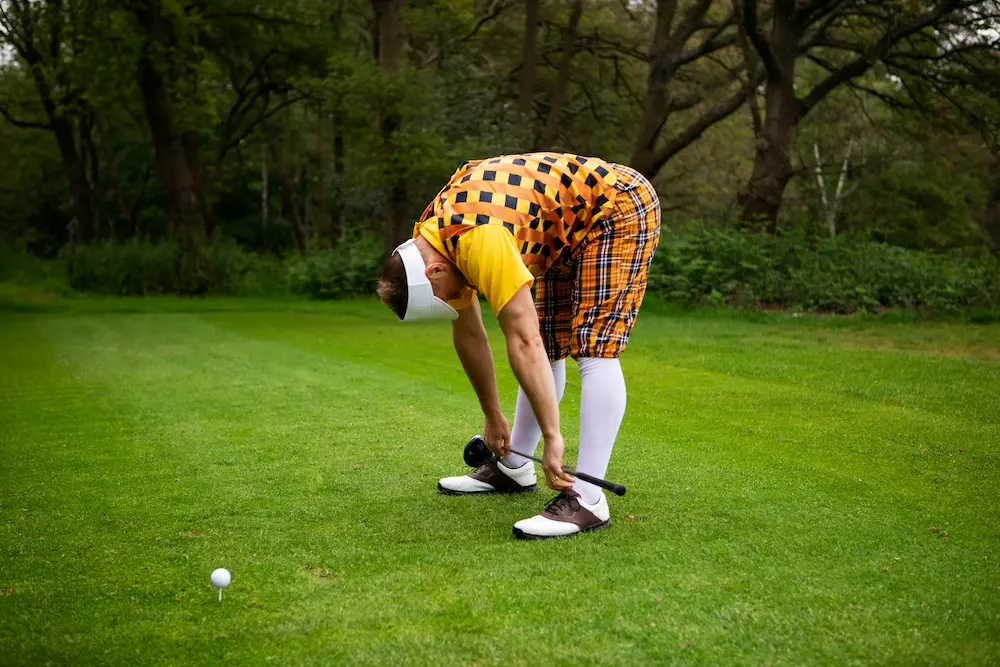
The address position in golf – head down, spine forward flexed – places sustained load on the cervical spine throughout a round. For golfers with existing forward head posture or cervical joint restriction, this sustained position aggravates neck pain and stiffness that worsens over the course of a round. Correcting cervical mechanics reduces this pattern and makes the address position more comfortable to sustain.
Rib Pain from Rotational Force
Costovertebral joint sprains – where the ribs attach to the thoracic vertebrae – are surprisingly common in golfers and are frequently mistaken for muscle strains. The rapid rotational deceleration of the follow-through phase can stress these joints significantly. The sharp, breathing-related pain of a costovertebral sprain responds well to targeted thoracic mobilization and soft tissue work.
How We Approach Golf Injuries at LiveWell Chiropractic
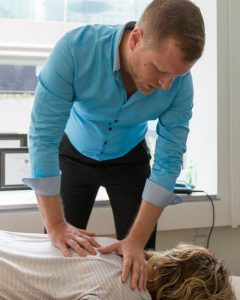
At LiveWell Chiropractic Health Center, golf injury assessment goes beyond the painful structure. We evaluate spinal mobility through the full range required by the swing, assess hip internal and external rotation bilaterally, examine shoulder mechanics and thoracic mobility, and identify the movement pattern faults and muscle imbalances that produced the injury.
When appropriate, on-site spinal X-rays provide baseline information on lumbar and thoracic alignment. Our athlete care approach is adapted specifically for the demands of each patient’s sport – for golfers, that means understanding what the swing requires and building a plan that addresses both the injury and the mechanics that produced it.
Spinal and Hip Mobilization
Restoring full rotational mobility to the lumbar spine, thoracic spine, and hips is the foundation of golf injury recovery. When the body can rotate freely through the joints designed for rotation, it stops compensating by overloading the structures that aren’t. Many golfers notice immediate improvements in their swing feel – less restriction, more effortless rotation – as spinal and hip mobility is restored through chiropractic adjustments and targeted mobilization.
Shockwave Therapy for Tendon Conditions
For golfer’s elbow, tennis elbow, and rotator cuff tendinopathy that hasn’t responded to conservative care, shockwave therapy offers a non-surgical path to tissue healing. Sessions run 10-15 minutes and most patients need 3-5 treatments. The results for chronic epicondylitis specifically are among the strongest in the shockwave literature.
Rehabilitation and Golf-Specific Strengthening
Our rehabilitation program for golfers targets the specific muscle groups that protect the swing – deep core stabilizers, hip external rotators, rotator cuff and scapular stabilizers, and the thoracic extensors that allow full backswing range. Building strength in the right places reduces injury recurrence and improves the physical foundation the swing is built on.
Performance Improvement as a Side Effect of Injury Prevention
One of the things golfers consistently notice after a course of chiropractic care is that their swing improves alongside their pain resolution. That’s not a coincidence. Better spinal mobility, improved hip rotation, and proper shoulder mechanics don’t just reduce injury risk – they’re the same physical qualities that produce a more efficient, powerful, and consistent swing. Taking care of the body that swings the club is one of the most direct ways to improve performance on the course.
Frequently Asked Questions
How soon can I return to golf after a low back injury?
It depends on the severity of the injury and how quickly the affected structures respond to care. Many acute lumbar strains allow a return to modified activity within 2-3 weeks. Disc-related injuries take longer. We give specific return-to-play guidance based on your assessment findings and how you’re responding to treatment.
Can chiropractic care improve my swing mechanics?
Chiropractic care improves the physical mobility and stability that good swing mechanics require – hip rotation, thoracic extension, lumbar control. Whether that translates to swing improvement depends on your technique, but the physical foundation is something we can meaningfully influence. Many golfers find that physical limitations they’d attributed to their swing were actually mobility restrictions that chiropractic care resolved.
Is regular chiropractic maintenance worth it for golfers who aren’t currently injured?
For golfers who play frequently, yes. Regular maintenance keeps the rotational mobility of the spine and hips optimal, addresses the asymmetrical loading patterns the sport creates before they become symptomatic, and keeps the structures under swing stress in better condition. Prevention is significantly less disruptive to your game than recovery.
If a golf injury is keeping you off the course in Clearwater, Palm Harbor, Safety Harbor, or Dunedin, we’d like to help you get back to playing comfortably. Call us at (727) 591-0550 or book your consultation online at LiveWell Chiropractic Health Center.