
You want to get back out there. Not just someday. Soon. That is usually why athletes start looking for a Sports Injury Chiropractor in the first place. The goal is simple enough. Reduce pain. Restore clean movement. Return to play without that nagging fear something will flare up again. I have seen how small adjustments, done in the right order, change a season. Sometimes a career. It is not magic. It is a plan.
What a Sports Injury Chiropractor Actually Does
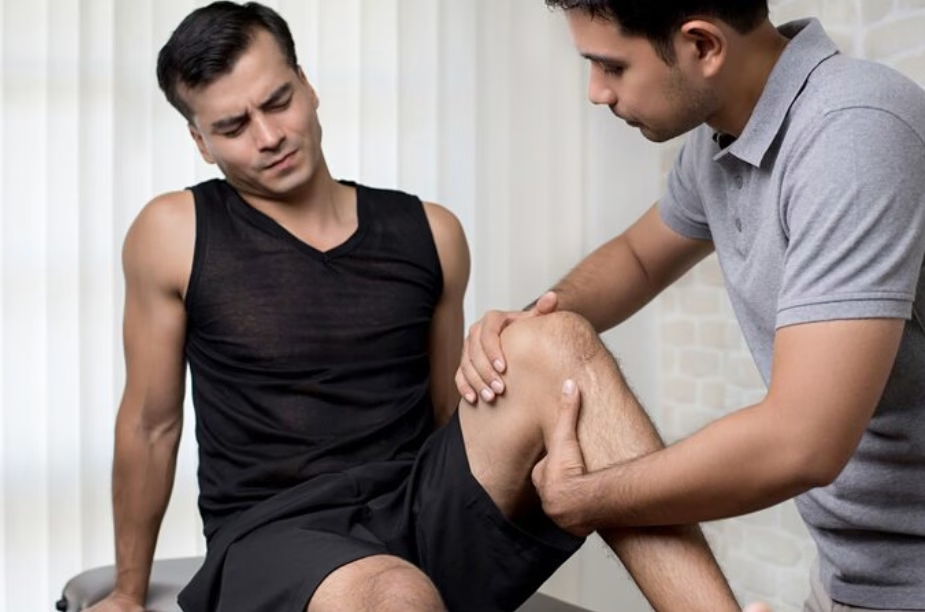
A Sports Injury Chiropractor looks at the whole chain, not just the sore spot. If your knee hurts, they will still check your hips, ankles, and even how your core fires when you cut or land. I like that approach because sports rarely isolate one joint. They pull on patterns. The work starts with a full assessment. Range of motion. Muscle testing. Palpation. Special tests for common issues like ankle sprains, runner’s knee, tennis elbow, or low back strain.
Expect clear findings. You should walk away knowing which tissues are irritated, which are weak, and which are tight. No mystery. Just a map you can follow.
Why Athletes Choose Chiropractic First
Athletes like feeling cause and effect. You get that with hands-on care. Joint restrictions open up and the movement often feels easier right away. Swelling calms. The foot strikes the ground a little cleaner. You might notice your gait smooth out or your shoulder track better. A Sports Injury Chiropractor blends that immediate joint work with soft tissue care, mobility drills, and strength progressions. It is a nice balance. Quick relief plus long-term control.
Other reasons athletes go this route:
- Appointments are efficient. You are in, treated, coached, and sent out with a simple plan.
- Care matches the training cycle. If you are in season, the focus is performance and protection. In the off-season, it shifts to capacity and durability.
- You get movement-based homework that actually makes sense in a warm-up or cool-down.
Proven Treatments You Will Likely See
Every clinic has its own flavor, yet the core tools are familiar. Your Sports Injury Chiropractor may use:
- Manual joint adjustments. Gentle, targeted techniques to restore motion where the joint is stuck.
- Instrument-assisted soft tissue work. Helps break up adhesions and ease overworked fascia.
- Myofascial release and trigger point therapy. Useful for stubborn hamstrings, calves, hip flexors, and rotator cuff.
- Active mobilizations. You move while the clinician guides a joint or tissue. Feels practical because it mirrors sport.
- Neuromuscular re-education. Think balance drills, tempo holds, and light perturbations. The nervous system learns control again.
- Strength progressions. Simple at first. Isometrics, short range, then full range. Load increases only when form holds.
- Return-to-run or return-to-throw protocols. Clear steps with criteria, not just dates. That matters.
I like adding recovery basics as well. Sleep quality. Protein targets. Hydration. Nothing fancy. Just the fundamentals that let tissues remodel faster.
Building Your Return-to-Play Plan
Returning too soon can feel tempting. I get it. A Sports Injury Chiropractor will slow that rush just enough to keep you safe without making you feel benched for no reason. The plan usually moves through phases:
- Calm the fire. Reduce pain and swelling. Restore basic motion. Breathing and gentle core work begin here.
- Control the pattern. Rebuild clean mechanics. Hip-knee-ankle alignment. Scapular control for throwers. Landing mechanics for jumpers.
- Add load. Strength lifts and sport-specific drills. Volume rises only if soreness stays under control the next day.
- Add speed and chaos. Cutting, reaction, contact. You earn this stage by passing simple tests. Hop tests. Single-leg control. Strength ratios.
- Full return. Practice minutes first. Then game minutes. Keep your activation drills. Keep your cool-down. Keep your maintenance visits dialed in.
Clear criteria makes the whole thing feel fair. You can see progress. You also know exactly what is left.
Sport-Specific Notes
- Runners. Gait tweaks, calf-soleus capacity, hip stability, and foot strength. A Sports Injury Chiropractor will likely add cadence work and a gradual mileage ramp.
- Lifters. Bracing mechanics, thoracic mobility, and tempo control. Expect isometrics and bar path drills.
- Throwers and swimmers. Scapular rhythm, thoracic rotation, and cuff endurance. Volume control matters as much as technique.
- Field and court athletes. Deceleration, cutting angles, and hamstring resilience. Small strength deficits can cause big problems at speed.
- Cyclists. Hip flexor relief, glute firing, and a fit check so the bike matches your body, not the other way around.

Preventing The Next Injury
Prevention is boring until it is not. Keep it simple. Your plan should fit inside a warm-up and a short home block on off days.
- Five minutes of mobility that targets your personal hotspots.
- Two to three strength moves that shore up weak links.
- One balance or power primer.
- A weekly check-in movement you film on your phone. Single-leg squat. Arm-care circuit. Whatever exposes drift early.
Do it consistently for a month. Re-test. Adjust. Small edges compound.
How Livewell Chiropractic Works With Athletes
Care should feel human. At Livewell Chiropractic, we start with a conversation. What happened and what have you tried. What your season looks like. Then an exam that sets priorities. We map your plan on one page so it is easy to follow. In-clinic treatment stays focused. At-home work stays short. We collaborate with your coach or trainer when that helps. You get honest timelines and real criteria. No fluff.
If you want a quick filter, ask yourself two things after your first visit. Did you learn something specific about your movement. Do you have a next step you can do today. If yes, you are on track.
Choosing the Right Provider
Not all clinicians speak sport. That is fine. You just need one who does. Here are a few questions to ask when you are vetting a Sports Injury Chiropractor:
- What is your approach in season vs off season.
- How do you set return-to-play criteria.
- Can you coordinate with my coach if needed.
- What will my home program look like on busy weeks.
- How will we prevent this from coming back.
The answers should sound practical. Short, clear, and tailored to your sport.
Common Injuries Seen In Clinic
- Ankle sprains. Peroneal strength and foot control decide the long-term outcome.
- Hamstring strains. Eccentrics, isometrics at long muscle lengths, and sprint mechanics.
- Patellar tendinopathy. Tempo squats, isometric holds, and load control.
- Low back pain. Hip mobility, core endurance, and hinge technique.
- Shoulder pain. Scapular upward rotation and cuff endurance trump gadgets most days.
Patterns repeat. Solutions do too. Personalization is about the dosage and the order.
When To Seek Care Immediately
Pain that wakes you at night. Numbness or tingling that does not fade. Loss of strength. A pop with immediate swelling. Red flags need a closer look. Your Sports Injury Chiropractor will screen for these and refer out when imaging or a second opinion makes sense.
A Quick Word On Expectations
Most athletes feel a change in the first two to three visits. Not perfect. Just better. The bigger rebuilds take longer. Four to eight weeks is common for tendon issues and chronic flare-ups. You can still train around the injury. You can still feel like an athlete while you heal.
FAQs
How soon can I return to my sport after chiropractic treatment?
It depends on the injury and how you respond. Many athletes return to modified practice within one to two weeks for mild strains or sprains. A Sports Injury Chiropractor will use simple tests to clear each step. Think pain-free range of motion, good single-leg control, and clean mechanics under light load.
What kinds of injuries respond best to chiropractic care?
Sprains, strains, tendinopathies, low back pain, and many overuse injuries respond well. The combination of joint work, soft tissue treatment, and progressive loading covers most sport problems.
Will I need imaging first?
Not always. If your exam suggests a serious tear, fracture, or nerve involvement, imaging helps. Otherwise, conservative care often improves symptoms quickly. If progress stalls, imaging becomes more useful.
How many visits will I need?
Short answer. Enough to calm pain and lock in clean mechanics. Many athletes do six to eight visits, then shift to maintenance during heavy training blocks.
Can I keep training while injured?
Usually yes. Your plan will include safe substitutions and a path back to full volume. It is better to train smart than to stop everything.
Do adjustments hurt?
They should not. Techniques are gentle and targeted. You might feel a quick release and then easier motion.
What about maintenance after I am back?
Brief tune-ups work. Once a month or around competition. Keep your home program. Keep your warm-up honest. That is often enough.
Your Next Step
If you are ready to move without guarding every step, book a visit with Livewell Chiropractic. Start with an assessment. Get a plan you can actually follow. Work with a Sports Injury Chiropractor who understands your sport, your season, and your goals. It does not have to be complicated. Just consistent.